Remembering the South African Native Labour Corps in fiction
July 01, 2026
You wait 4 years to publish a new book and then two come along in the same month! Well not quite two whole books. There is my non-fiction story of 1920’s writers and artists in Tahiti – Guys like Gauguin - published by Troubador Publishing next month and then also my contribution to a book on African fiction.
There Came a Time 3 … Fiction as Memory
Three years ago, I was asked by Anne Sansom the co-ordinator of the Great War Africa Association (GWAA) if I would be interested in contributing to a book about First World War fiction relating to Africa. She knew about my interest in the South African Native Labour Corps (SANLC) and had read my book Utterly Immoral about my grandfather Robert Keable who had served as a chaplain to the SANLC in France. The proposed book was to be the third in a series of books published by the GWAA under the umbrella title There Came a Time. This one was to be called Literature as Memory: Fiction and the Great War in Africa.
I completed the first couple of drafts of my chapter back in 2023 and had almost forgotten about it. But then, in June, I heard from Anne that she and her co-editor Sérgio Neto were finally ready to publish with a launch planned for July 2026. The book has a new title There Came a Time 3 … Fiction as Memory.
I find myself in the exalted company of some eminent academics and now wonder whether the decision to highlight the incongruous introduction of a member of the SANLC in an episode of Peaky Blinders is really such an important issue. Still, I had fun writing the article and I hope the book gets the recognition the other contributors deserve.
Obviously, I would be delighted if you decided to buy the book, available soon through TSL books (https://tslbooks.uk/), but in the meantime I can offer you a précis of my chapter.
Remembering the South African Native Labour Corps in fiction
In my essay I began by looking at what we know today in Britain about the SANLC, before considering why so few books were written about the men after the war and then, after taking into account the number of books written about other non-white labour corps, I discussed more recent fictional accounts of the SANLC.
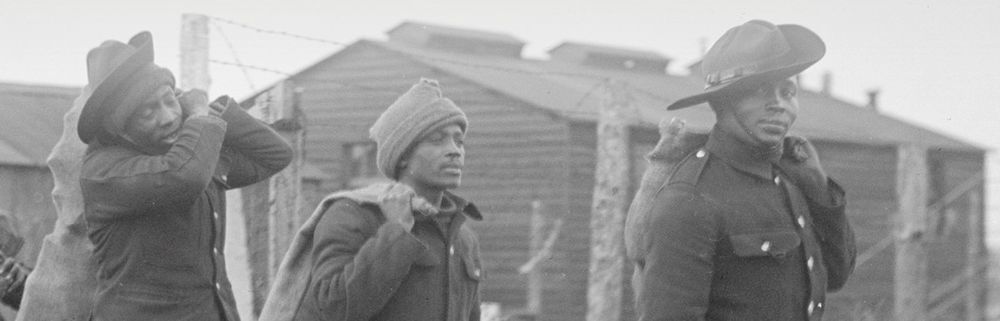
Over 27,000 black Africans served in France in 1917 and 1918 as part of the British Labour Corps. Their record, principally unloading ships and working in quarries and forests was impressive and they certainly played an important part in the war effort. They were badly treated, segregated from all other groups and let down by some of their, clearly racist officers. And after the war they received no recognition. None of the South African members were given medals. The official history of South Africa’s contribution in France during the First World War – published in 1921 – made no mention of the SANLC, except listing, in the appendices, the names of white SANLC officers who won awards for their service. Other general histories merely referred to the SANLC in passing.
Robert Keable was the only white officer who served in the SANLC to write about his experiences. Sadly his 1918 book The First Ten Thousand was banned by the British censors and never published but he did include a few chapters in his book Standing By published in 1921. The only African member of the corps to published memories of their time in France was Stimela Jason Jingoes. However, his biography A Chief is a Chief by the People, based on extensive interviews, did not come out until 1970. The first academic paper on the SANLC was Brian Willan’s ground-breaking article published in 1978, followed by books by Norman Clothier and Albert Grundlingh.
In terms of post WW1 fiction, I have found no novels mentioning the SANLC apart from Robert Keable’s Simon Called Peter and even he only references them in passing.
Why was the SANLC forgotten so quickly?
There are a number of reasons the contribution of the SANLC was forgotten so quickly. As labourers their work was always going to be less memorable than fighters and, in the normal course of events, there was little chance for the type of heroism that soldiers displayed on the front line. The most shocking incident, during which there were some true heroics, was the unnecessary death of 600 men who died when the SS Mendi sank on its way to France. This event received little publicity at the time and has only received proper attention in South Africa after the end of apartheid.
Another reason they were quickly forgotten was because they were withdrawn from France by the South African government before the end of the war so could not collectively join in the celebrations. Worse still on their way home two of their ships pulled into a port in Sierra Leone and some of the men returned to southern Africa with the worse strain of Spanish Flu, which was quickly spread.
The British after the war quickly chose to forget the contribution of men from the colonies. By the middle of 1919 there was a deep feeling of resentment, especially amongst returning soldiers, against black, Chinese and Arab ethnic communities in Britain. There were violent race riots in Glasgow, South Shields, Salford, London, Hull, Newport, Bury, Liverpool and Cardiff, which included the lynching of Charles Wootton by white rioters, the death of four others and many injuries. In the aftermath the British government intensified repatriation schemes deporting an estimated 3000 black and Arab seamen.
Novels featuring non-white WW1 labourers
Between the wars there were no novels featuring members of the SANLC but a few with characters from other non-white labour corps. The Dripping Tamarinds by Cecil Champain Lowis, published in 1933, follows the commander of an Indian labour company who travelled to France and falls in love with a nurse. Jesse Graham Flower’s Grace Harlowe’s the American Army on the Rhine features derogatory stereotypical Chinese labourers (described as ‘wild heathen’, ‘animals’ and ‘cut-throats’) and the French novel Le Réveil des Morts has Chinese labourers helping to find the body of a dead soldier after the war.
More recently there is one group of labourers – the Chinese Labour Corps – which has spawned a number of fictional accounts. By my estimate sixteen novels featuring member of the Chinese Labour corps have been published since 2006, with at least five written in English.
Novels, and TV shows featuring labourers serving in the SANLC
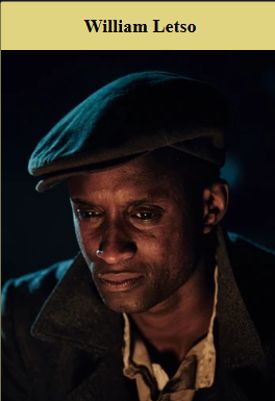
Fictional representations of SANLC labourers remain rare but this century I have come across three. The first, the forementioned introduction of a character in Steven Knight’s Peaky Blinders. Private William Letso, played by Pater Bankole, is introduced as: ‘from South African Native Labour Corps, sent to Flanders from the Bloemfontein diamond mines and the best tunneller I ever met.’ (Unlikely for Tommy Shelby to have worked with men of the SANLC for so many reasons!)
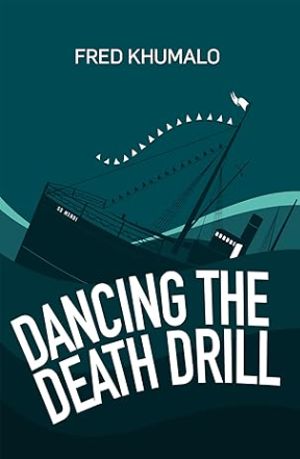
Much more interesting are two novels both published in 2017 during the 100th anniversary of the sinking of the Mendi. Fred Khumalo used a well-known legend about the Mendi as the basis of his novel, Dancing the Death Drill, a Wilbur Smith-style romp. The hero, Pitso Motaung, is a mixed race South African, the product of an affair between a 16-year-old Bataung girl, and the son of an Afrikaans general. His pale colour allows him to pass at different times as white, black and North African. His unlikely education – learning to play the piano, speak French and to swim, equip him for his adventures ahead. The implausible plot is held together by the story of Pitso’s time in the SANLC and his journey on the ill-fated Mendi.
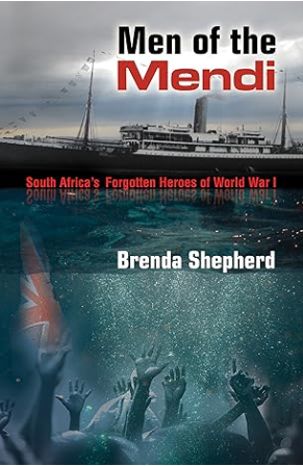
Brenda Shepherd’s Men of the Mendi is also based on the experience of men who served with the SANLC. She draws heavily on the fascinating folder held in the British National Archives detailing the inquiry into the sinking of the Mendi to tell her story. And, like Khumalo, she also skilfully manages to incorporate many of the stories uncovered by academics into her tale.
Whereas Shepherd tries to ground her novel in reality, Khumalo uses true accounts as a springboard for an entertaining drama. What is important about both novels is that they give readers who may know little if anything of the SANLC and the SS Mendi an opportunity to find out what happened 100 years ago.
Hopefully in the future there will be many more novels that help to celebrate the important work of the SANLC.
Other essays in There Came a Time 3 … Fiction as Memory
I have only had a chance to read a few of the essays in the book, but I can highly really recommend the three I have read. Anne Samson writes about The African Queen looking at the novel by C.S. Forester, the 1951 movie starring Humphrey Bogart and Katherine Hepburn, other alliterations and the Lake Tanganyika Expedition of 1915-1916 on which the stories are based. Peter Terry explains how he devised his one man play about Delville Wood, creating a South African character who fought in the battle to give his account while revisiting the battlefield in the 1970s. Alex Capus looks at the complicated issue of African colonialism for German writers and discusses why there are so few German novels written about their colonial era.
There are almost 20 essays in the book so I will look forward to reading the others and again strongly recommend There Came a Time 3 … Fiction as Memory.